the plays and a reading room · ongoing
Computer Theater
Computer theater is live performance made with computers. The computer can be the set, the projection system, a scene partner, or the thing writing the script.
It has no single origin. Four histories feed into it: theater makers who broke the form open, artists who connected their bodies to networks, directors who brought cameras and screens onstage, and artists who treat the computer screen as the stage.
Some people call this algorithmic theater, Annie Dorsen’s term for shows where an algorithm writes or steers the performance. Computer theater is the wider name. It covers that, and everything from Piscator’s projectors to a browser performed live.
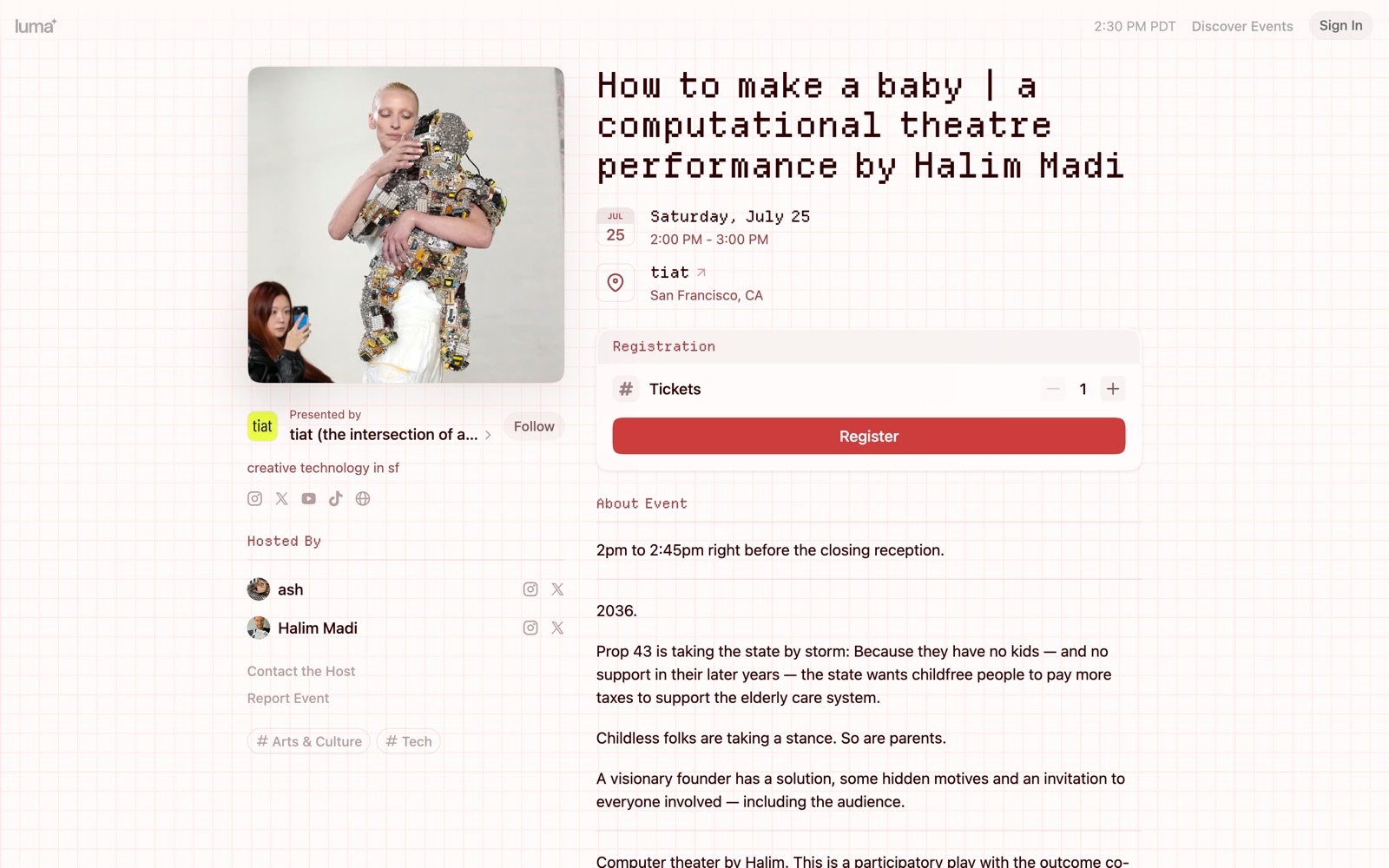
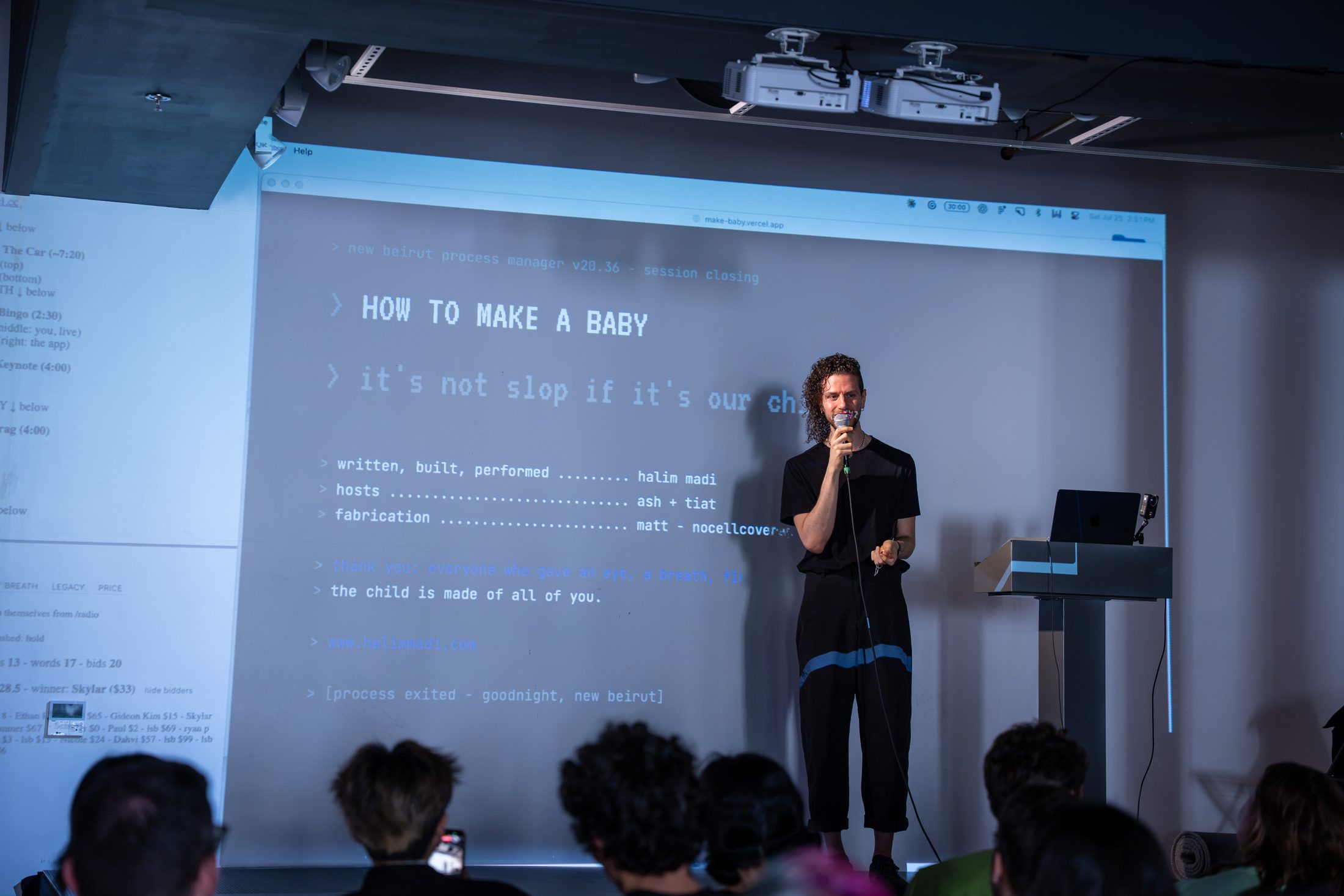
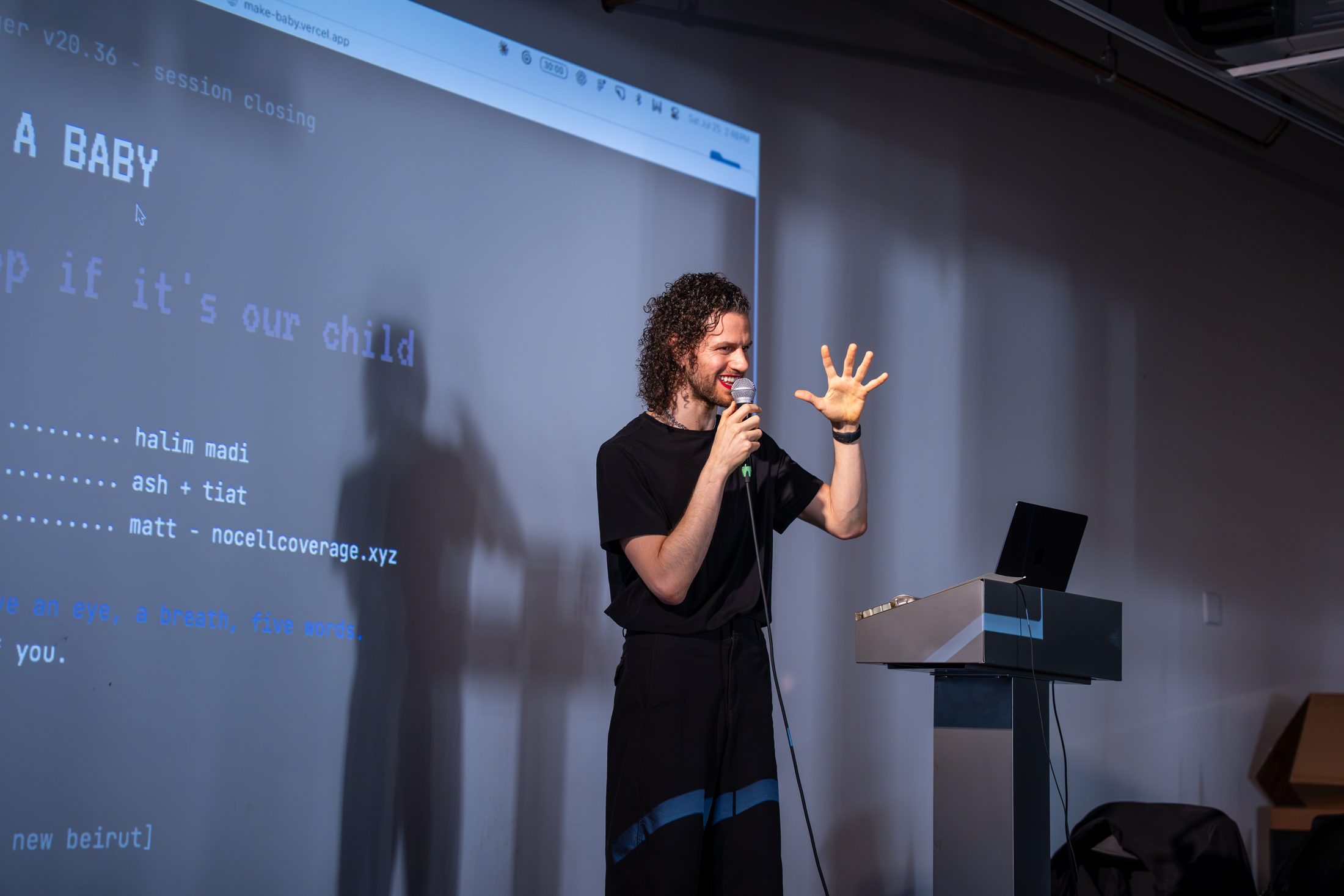
how to make a baby, tiat
How to Make a Baby
Jul 25, '26 · tiat, San Francisco
A participatory computer theater performance set in 2036. Prop 43 wants the childfree taxed to fund elder care; a visionary founder arrives with a solution, hidden motives, and a contract for everyone in the room. Nobody watches from outside: the audience argues, votes, signs, and the play ends however the room decides. Premiered at tiat, San Francisco, July 25, 2026; re-performed with Ana María Caballero that August.
open the work page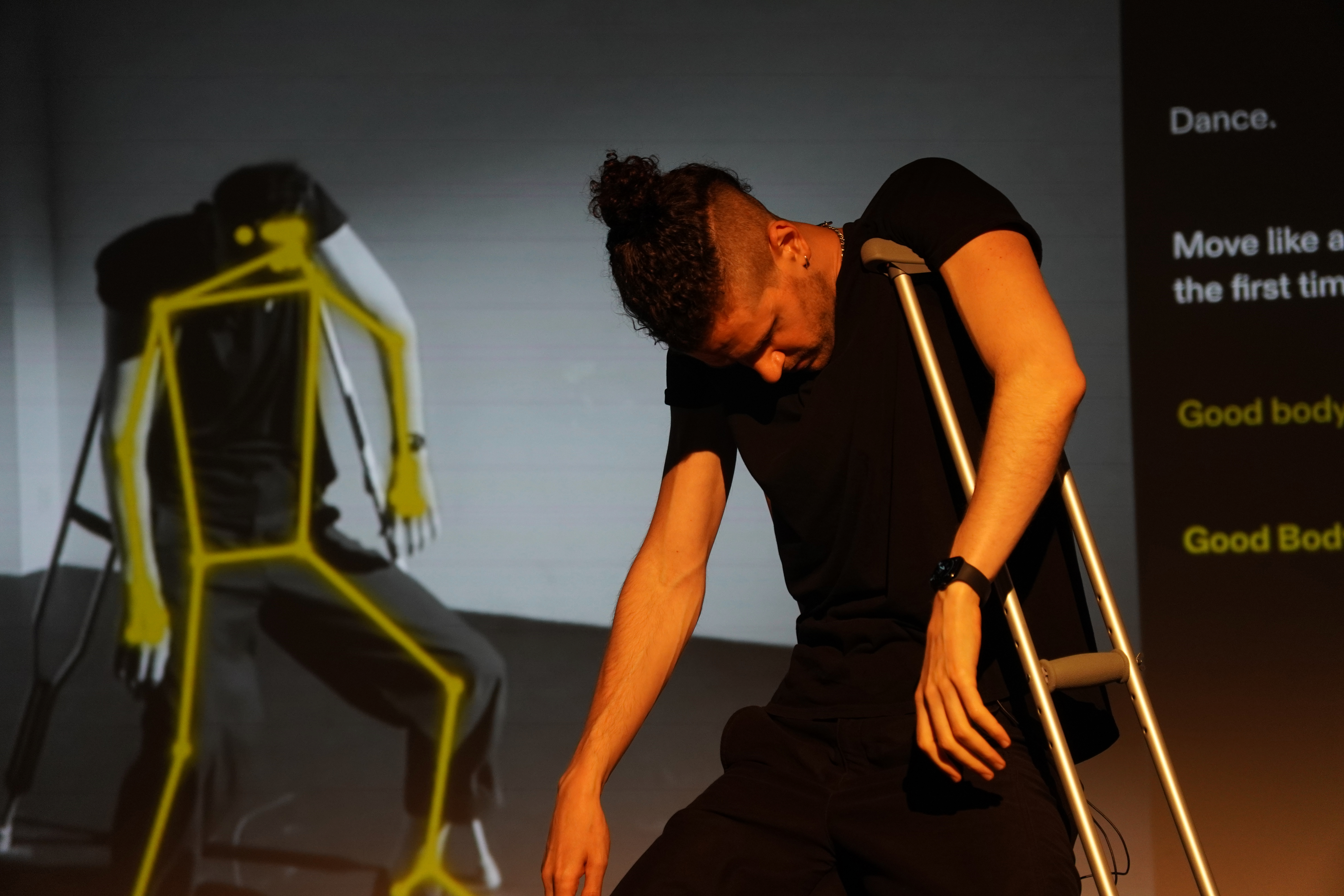
I've Always Wanted to Become Everyone
Apr '26 · CultureHub, Los Angeles
Nineteen folders on a dark desktop, projected on two screens. The audience opens them, and a yellow physarum mold grows between whatever they choose to see.
open the work page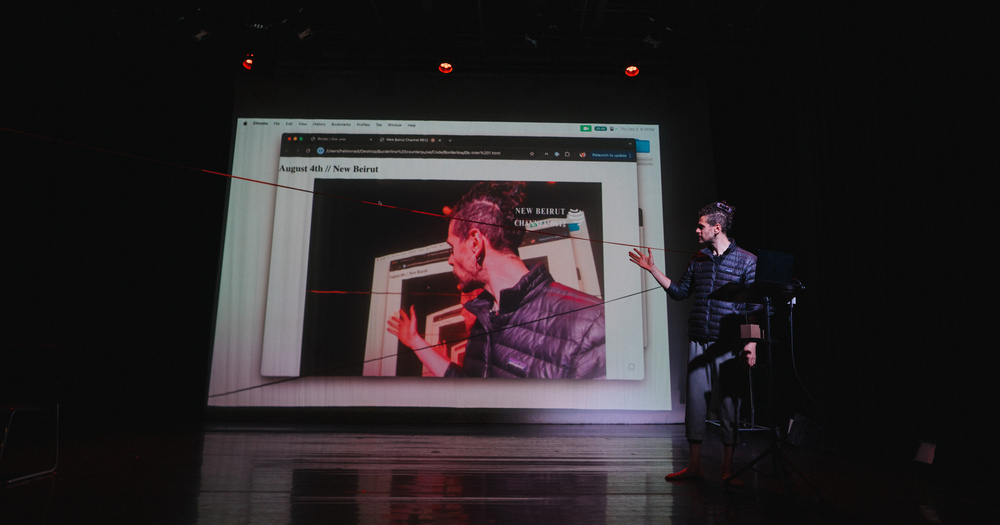
Borderline
Dec '24 - Jan '25 · San Francisco
A full-body multimedia poem about borders, queerness, and the architecture of belonging. Arabic zajal, projected code, and a body on stage negotiating all of it at once.
open the work page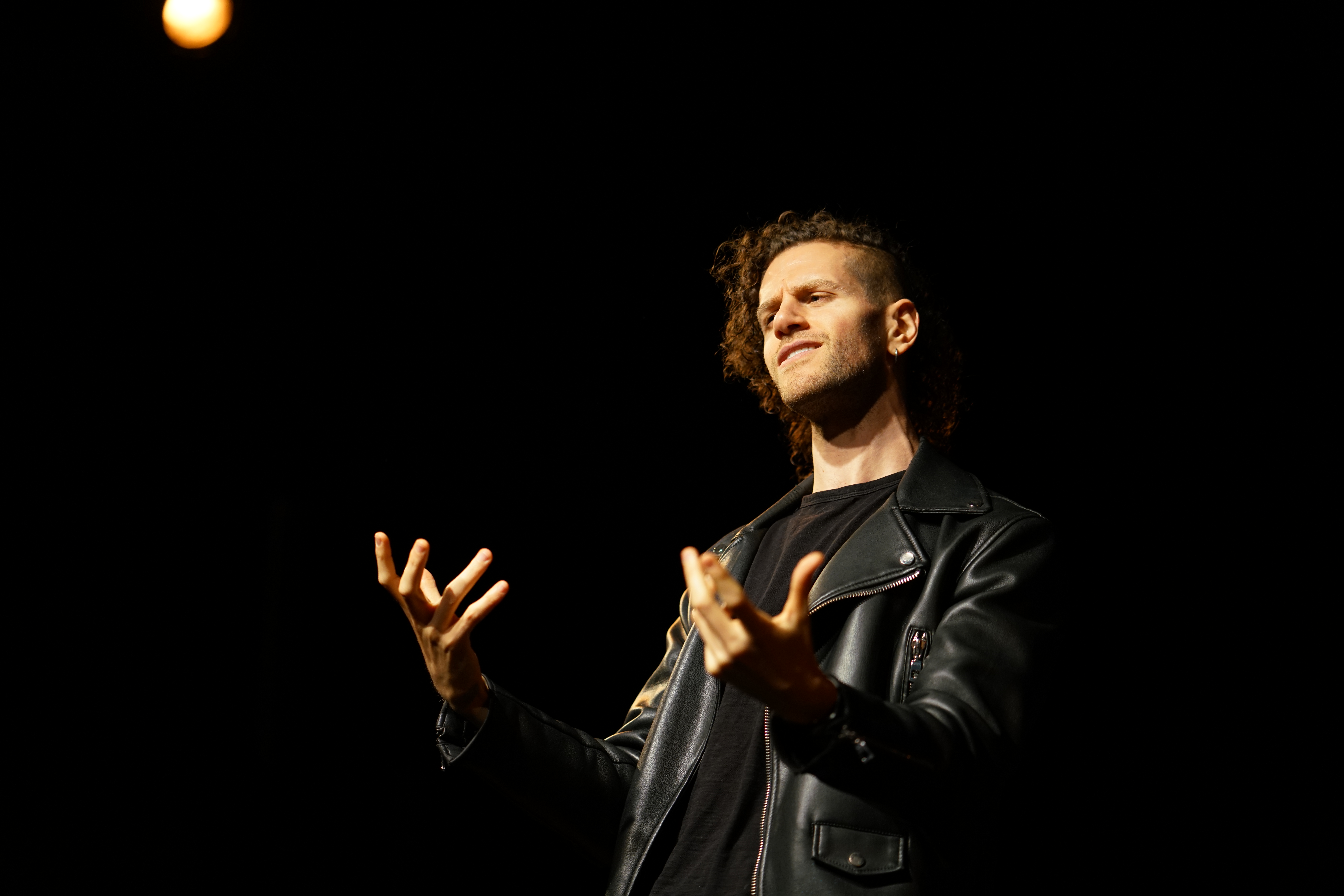
Invasions
Jun '22 - Apr '24 · San Francisco, Los Angeles, CDMX, Santa Barbara, Ojai
Performance piece exploring scam, intrusion, and intimacy.
open the work pageEverything performed, 2014 onward
The full ledger.
I've Always Wanted to Become Everyone Apr 8 and 25, '26 San Francisco · Los Angeles 2026
A sneak-peek reading at TIAT, San Francisco, on April 8, then the premiere at CultureHub LA on April 25.
open the work pageEra Puck Mar 2026 2026
The Era puck became the BCI in the play.
open the work pageHow to Make a Baby Jul 25, 2026 TIAT, San Francisco 2026
A participatory computer theater performance set in 2036: Prop 43 wants the childfree taxed to fund elder care, and a visionary founder arrives with a solution, hidden motives, and an invitation for everyone - including the audience.
open the work pageA Night of Computational Theater Aug 21, 2026 tiat, San Francisco 2026
An open mic of computational theater and desktop performance, hosted and curated by Halim Madi with the computational poetry reading group at tiat.
the listing ↗Techno Retro Poetics Aug 11, 2026 tiat, San Francisco 2026
Two poets, analog and multimedia readings: Ana María Caballero reading from her new book Material, and Halim Madi performing with web artifacts and the models he fine-tunes.
the listing ↗We Called Us Poetry Jun '25 Toronto 2025
Interactive performance and computational poem on AI as god vs apocalypse.
open the work pageFuture v. May '25 Online 2025
A browser piece that opens as three walls of punctuation you drag and fuse - a hub disguised as a blank page, each character a doorway.
open the work pageFeed It May '25 Seoul, South Korea 2025
A durational AI-body performance where audience answers shape a real-time generative portrait.
open the work pageI Live Here Apr '25 San Francisco, CA, USA 2025
A walking poem through San Francisco's Tenderloin, mapping queer nightlife from Beirut to the Bay.
open the work pageSquare, Powder, Claw Feb 23 SF 2025
A triptych on boyhood performed at tiat #10 (the intersection of art & technology), Internet Archive, San Francisco.
open the work pageWe Made It Dec 5-14 San Francisco 2024
Performance at Counterpulse, San Francisco - The Happy Endings Show.
open the work pageBorderline Dec '24 - Jan '25 San Francisco, CA, USA 2024
A full-body multimedia poem about borders, queerness, and the architecture of belonging.
open the work pageHappy Endings Show Sep 10 SF 2024
Make Out Room.
open the work pageAlgorithm's Embrace Jun '24 San Francisco, CA, USA 2024
Performance.
open the work pageDeserve It Dec '23 - Nov '24 San Francisco, CA, USA 2023
A durational immigration performance - a fictional visa form that scrambles your answers into poetry.
open the work pageInvasions Jun '22 - Apr '24 San Francisco, Los Angeles, CDMX, Santa Barbara, Ojai 2022
Performance piece exploring scam, intrusion, and intimacy.
open the work pageAvenir Mar '15 - Sep '17 Paris, Sao Paulo 2015
A series of site-specific interventions exploring futures, migration, and the politics of public space.
open the work pageThe writing
Writing about computer theater, published on Substack. New pieces land there first.
- Mar 24 · 2026 Vibe Thinking, Part 1 written while making the digital theater piece 'i've always wanted to become everyone': almost outsourcing a mother's monologue to the next-token predictor, and what that arbitrage does to thought
- Nov 4 · 2025 The Wire and the Cuddle Puddle early networked performance (hole in space, satellite arts, electronic cafe) as communion: art living in the transmission between bodies and machines, kin to the mosh pit
- Sep 2 · 2025 Embodied Practice in the Age of AI: Cosmotechnics Revisited why performance art, theater, and live poetry matter more under ai: presence is not replaced by digital systems, only shifted and deepened, via yuk hui's cosmotechnics
Commissions and touring
The plays travel and new ones get commissioned. Write to me about a run at your venue, a play built for your room, or a night of computer theater with your audience.
start a conversation