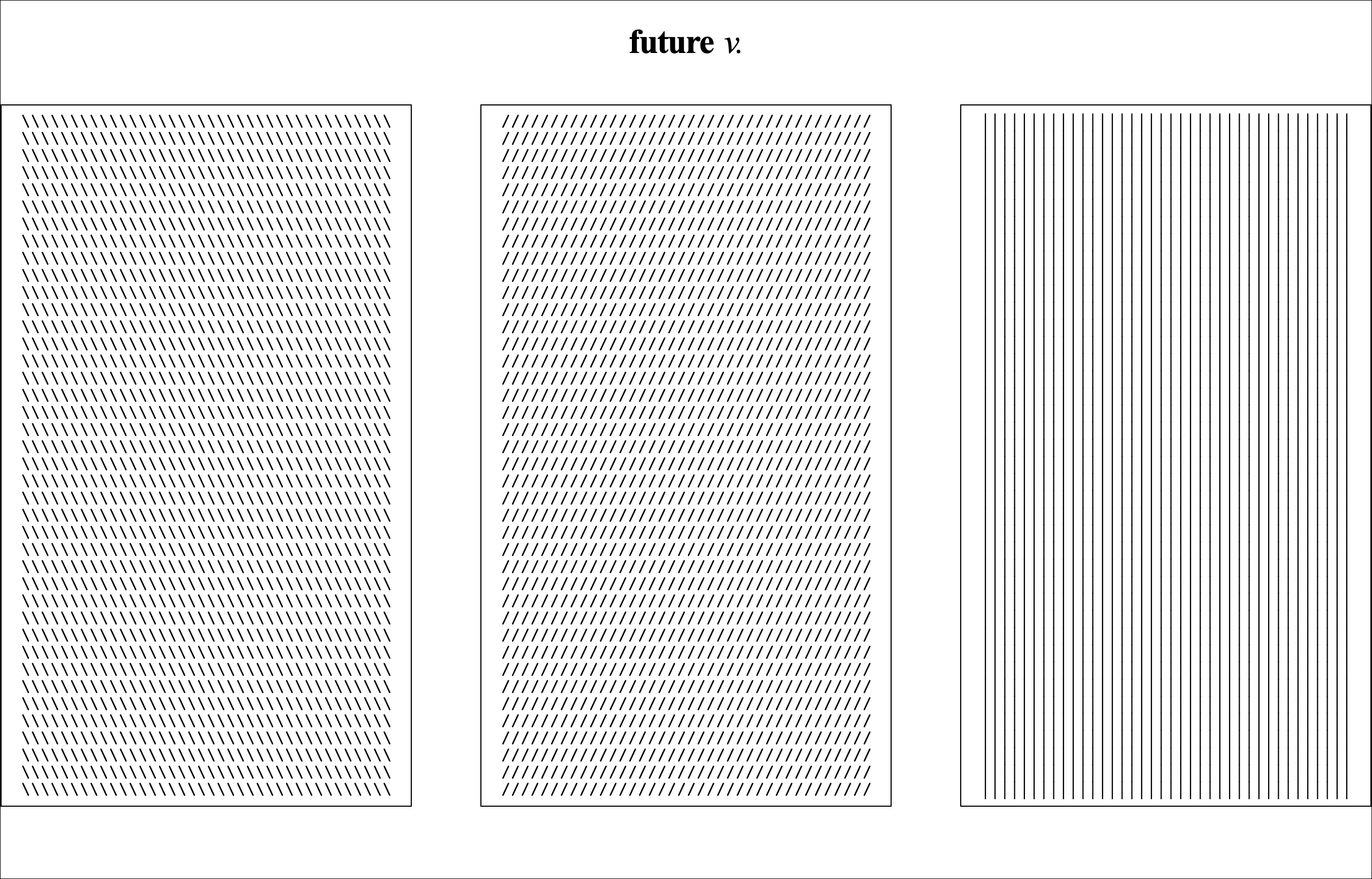
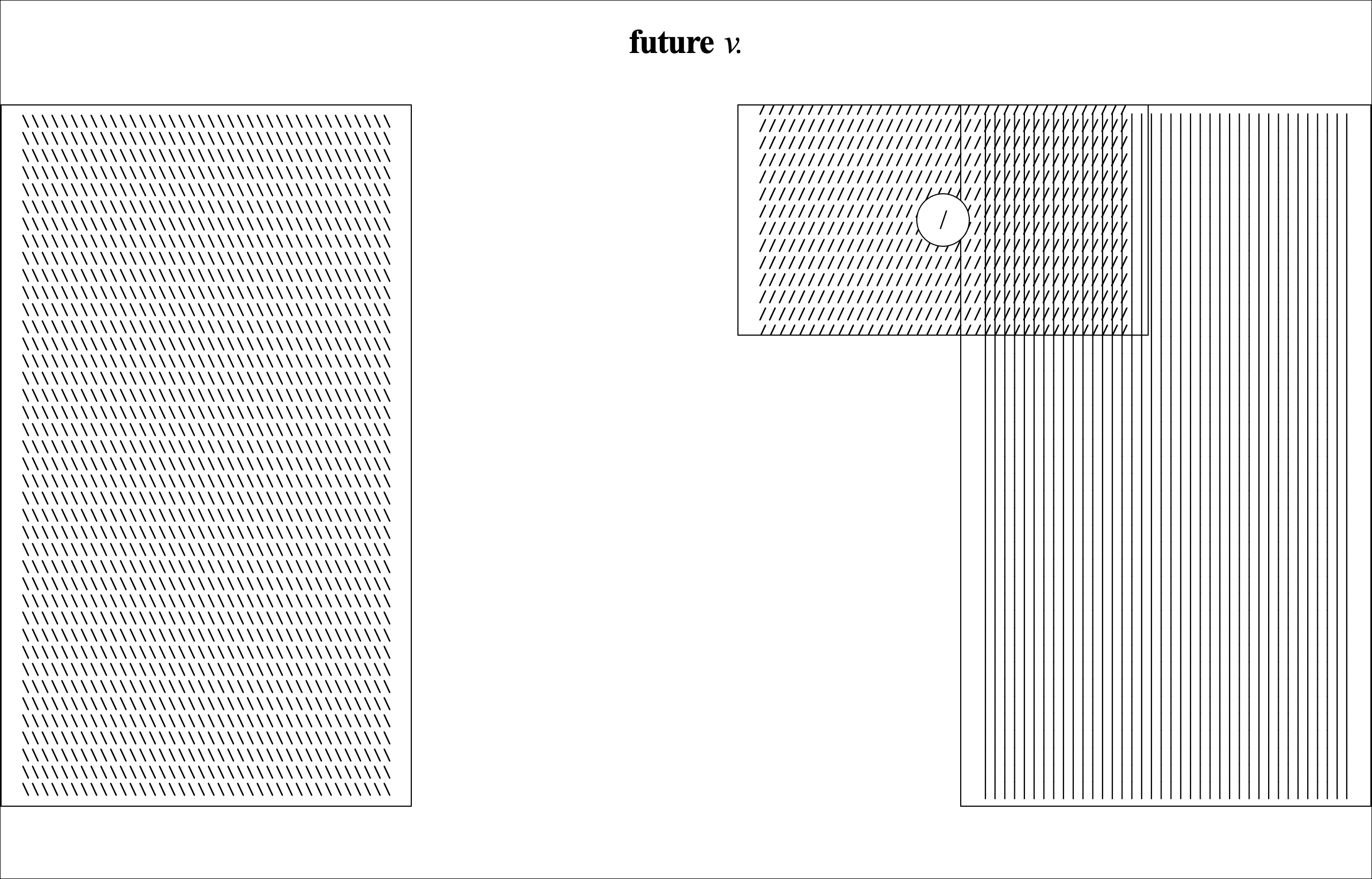
Future v. opens as three empty rectangles on a white field, each one filling itself with a single repeated character - a wall of backslashes, a wall of slashes, a wall of pipes - marching across the screen like code that forgot what it was meant to compute. You drag them. The cursor turns to a grabbing hand, the rectangles lift and cast a shadow, and if you stack all three until they overlap they fuse into one rectangle of asterisks. From there a small button opens another room. Nothing announces itself.
The whole interface is built from punctuation - the marks we use to break lines, to escape characters, to pipe one thing into another - treated as material rather than syntax. Each character is a doorway. The slash launches a piece on embeddings; the pipe opens a chain of text blocks that begin with begin and resolve into trust and attention; the backslash opens a wall of poet portraits; the merged asterisk sits with AlphaGo and Lee Sedol. Clicking the title summons a fine-tuned poetry chatbot that asks what future you are longing for.
Future v. is a hub disguised as a blank page, a launcher you have to play with before it admits it is a launcher at all. It belongs to a practice of a different futuring - poetic web interfaces that strangify the default grammar of corporate platforms and ask what else the web could be. It was made in the orbit of the Weirding the Web workshop, and it reads as my own weird, delightful corner of the internet.