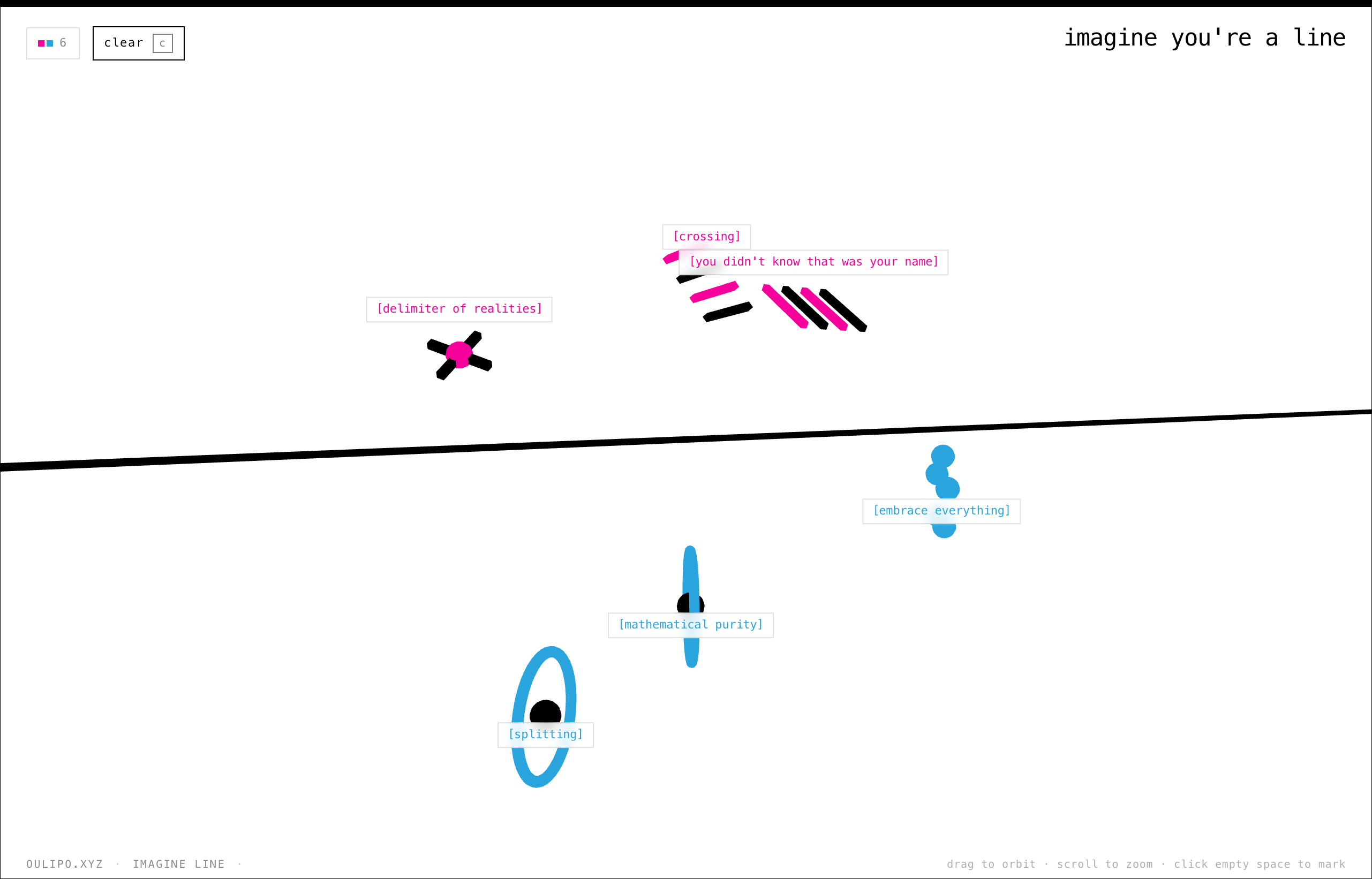
A single black line hangs in white 3D space. You orbit it, pan, zoom, inspect it from any angle - an abstract object minding its own business, extending toward infinity. Click into the empty space around it and a small biological artifact spawns where you clicked. Click above the line and you get one vocabulary of forms; click below and you get another. The accumulated debris slowly makes the line legible as a border - without the line ever consenting to that role.
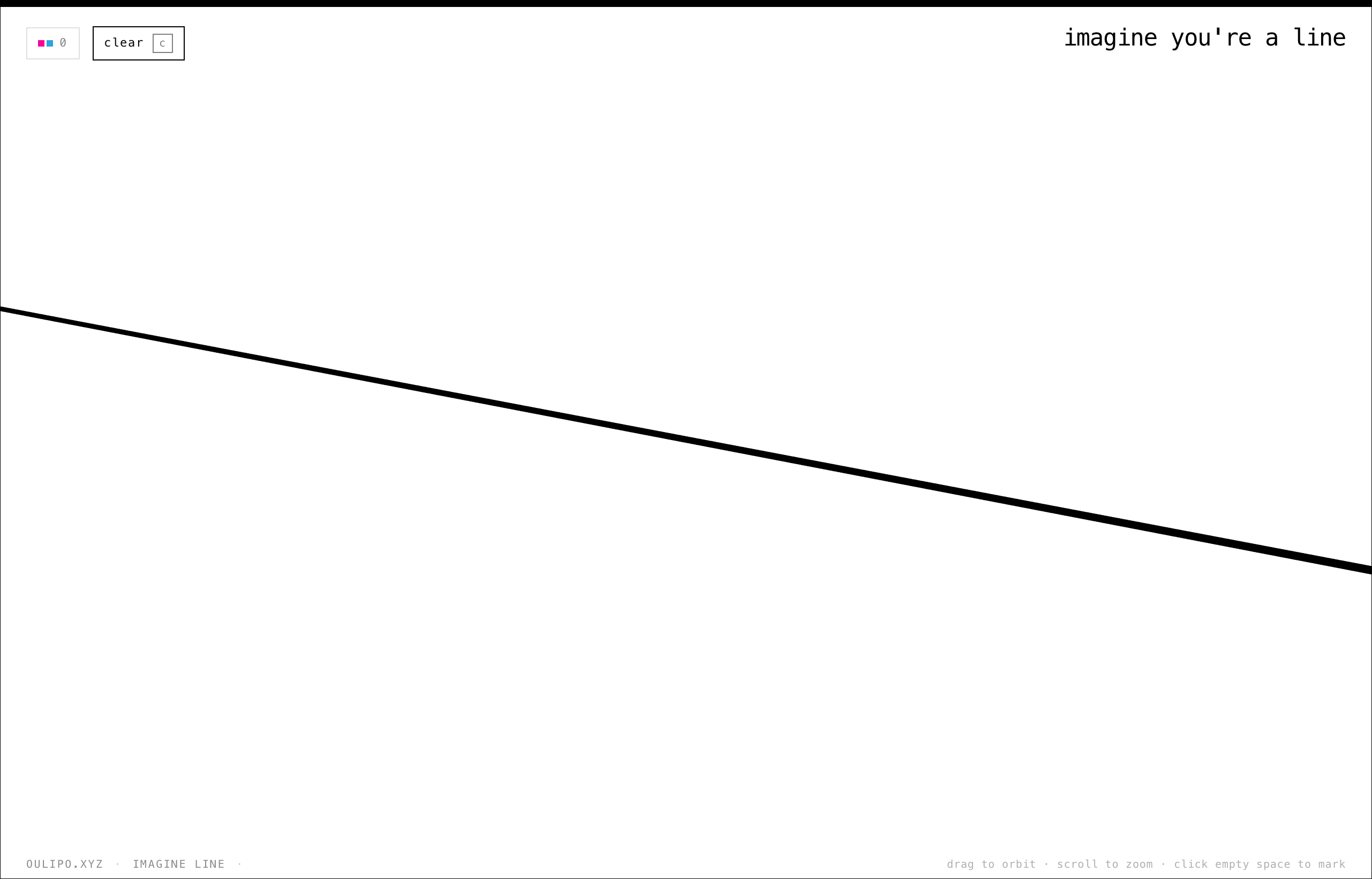
The piece stages the moment an abstraction is conscripted into politics. A line is pure connection, the grand vision that two points could stretch to embrace everything. Instead the connection becomes a delineation, and bodies gather on either side and treat the line as arbiter, as delimiter of realities, as a name - border - it never chose. A manifesto cycles in a small overlay and paces the meditation: imagine you're a line, just doing your line thing. The border is having an identity crisis. Go back to dividing, border.
The closing turn is the heart of it. The line has lost its origin, but the bodies crossing it have not. Unlike the line, their stories start somewhere.
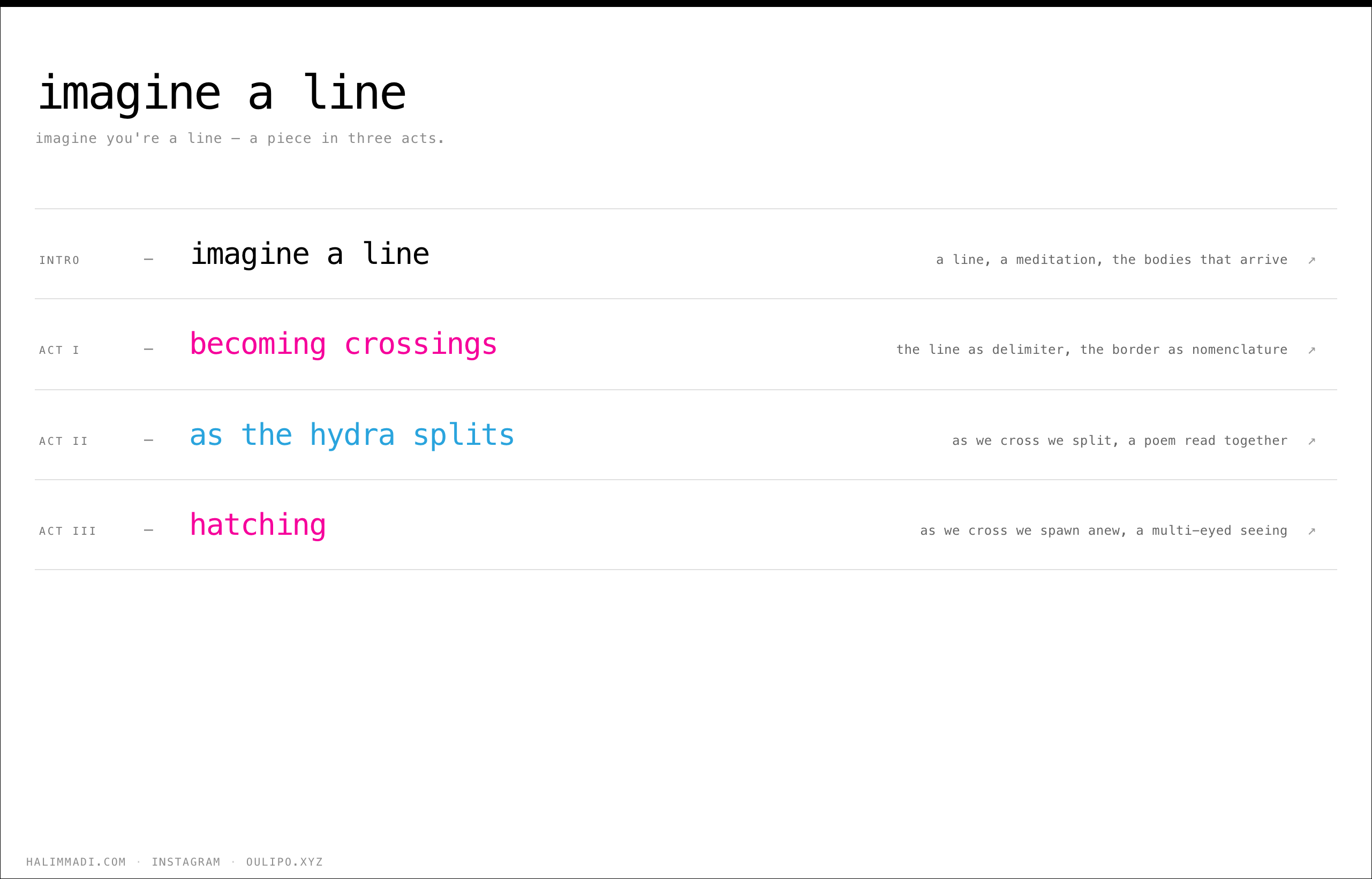
Imagine a Line is also a parent frame. It gathers three acts - Crossings, Splittings, and Hatchings - each opening on the same line and the same question. This is the contemplative, solo-reading end of that family.