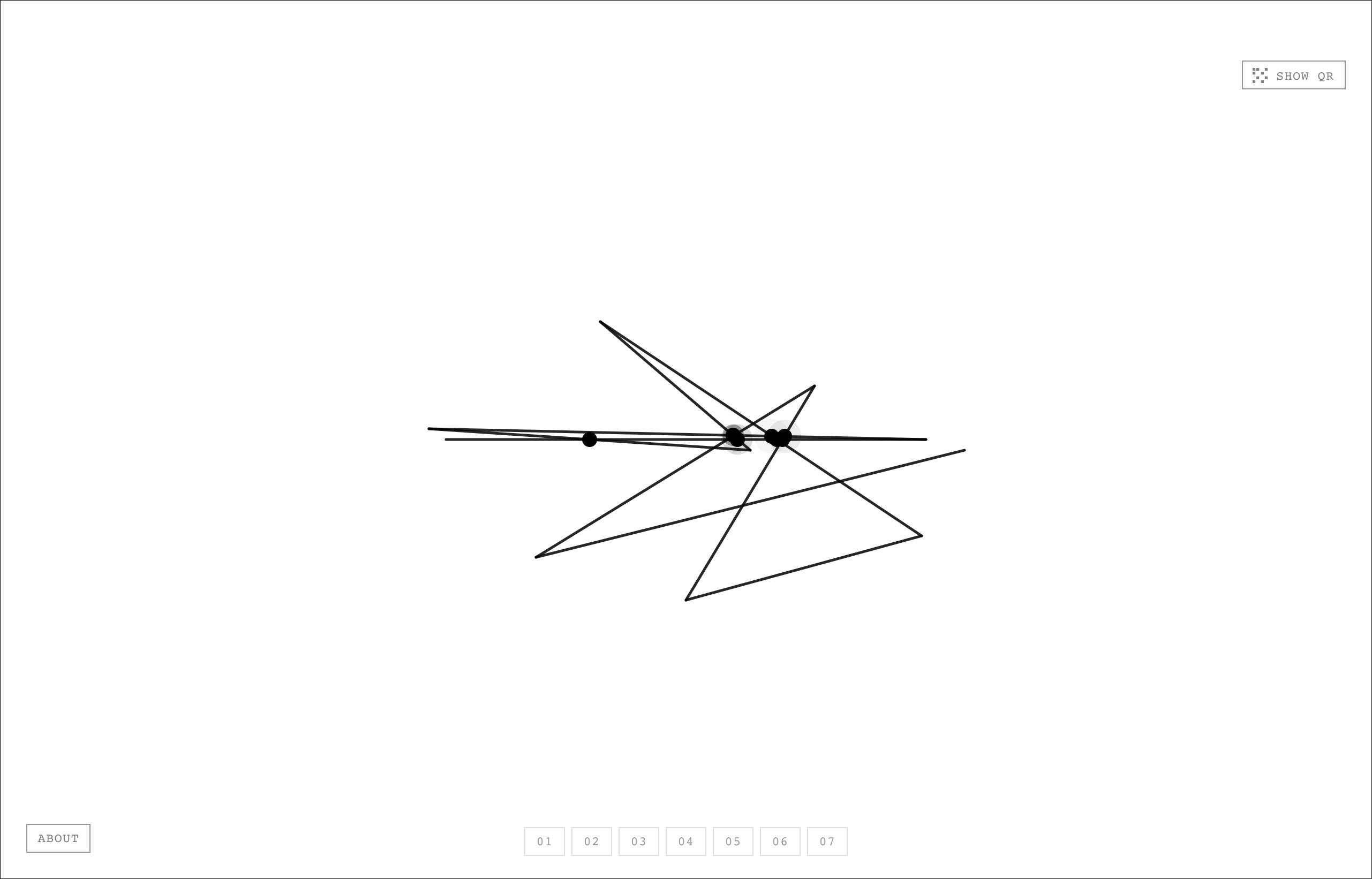
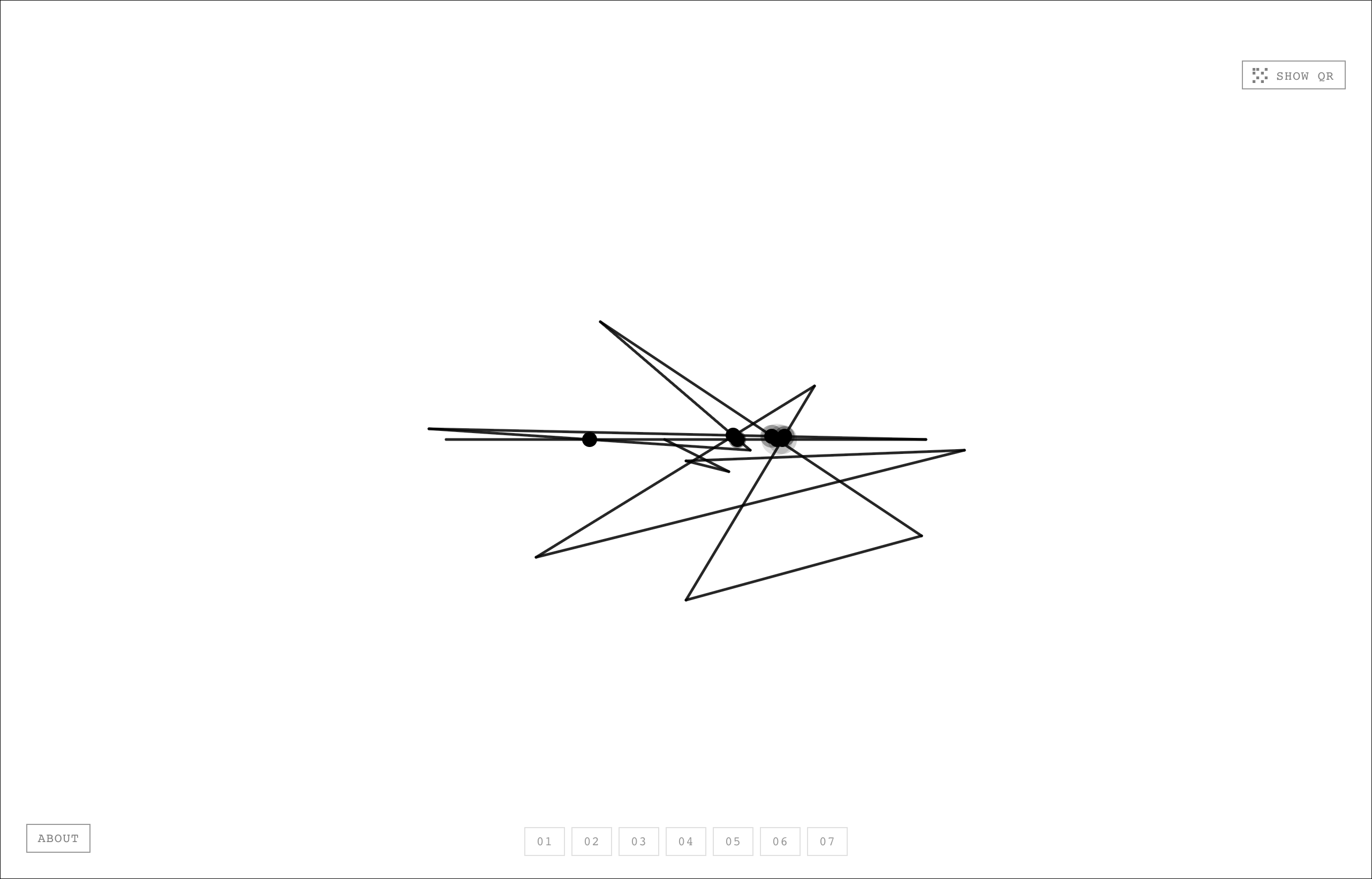
Becoming Crossings opens with a single black segment on a white page. You click. The line extends. You click again. It extends again. At some point a new segment crosses an old one and a pulsing dot appears at the intersection. Seven dots in total, one for each story. Click a dot and a small rectangle opens, holding text and images. Close it. Make another crossing. Make another.
The piece treats digital borders the way the migrant treats physical ones. As something you do not so much cross as become. Twelve years ago, when asked at the British border what I intended to do during my visit, I shared I might use my laptop to get some work done. I was refused entry. That day, my life line diverged and a new timeline set in. I became the border I did not cross.
The border is a feeling, familiar like my funny uncle’s sunday jabs. When I VPN my way into barred content, incognito my way against the panopticon walls of algorithmic triaging into higher price brackets, I am embracing the eel as a power animal. If real-world migrants need to erase and deny old, and reach for new, identity parts in a high-stakes combinatorial game, digital migrants conduct comparable identity operations. Sum and subtract bits of cyber alter egos into a morphing otherness. Chameleon into alternatives. Become illegible to themselves.
The screen came later. First was the skin. The skin is the largest organ. The oldest magic trick: a cloak of invisibility. You have no idea what the skin can seal. What the skin conceals. You have no idea what wants to hide, not under, but behind it. You think the border is the wall over there. You have no idea.
By the end, you have drawn and crossed a number of lines by yourself. The piece notices this back to you, plainly: a landscape of self-invasions, a quilt of personal trespassings, all yours now. You can download the map of crossings you made. You can also see the maps others made before you. Becoming Crossings was selected for the Retro AI symposium at USC (July 31 to August 1, 2026), curated by Mark C. Marino, Lyr Colin-Pacheco, and Jeremy Douglass through the Critical Code Studies Working Group, and included in the symposium’s online gallery.
The border is a feeling. The line is a body. You have been drawing both this whole time.